
Thinking about traveling to the land of the rising sun? Then you must be wondering if a visa is necessary and what you need to do.
If you are planning to travel for tourism to Japan and need information on whether a visa is required, what the procedures and recommendations are, then keep reading this post!
Which countries need a visa for tourism in Japan?
To travel to Japan for tourism, a visa is required for countries such as Russia, China, the Philippines, Vietnam, Georgia, CIS member countries, and some other countries in Europe, Latin America, the Caribbean, Africa, and Asia. They need a visa to enter Japan even for tourism purposes. You can see the complete list of countries here.
To obtain the visa, several steps are necessary, as you will see below. It’s important to note that your visa application must include various documents dated within the last 3 months. In other words, you can only submit your tourist visa application for Japan three months or less before the date of your trip.
Therefore, it’s crucial that you follow all the guidelines from the Consulate or Embassy of Japan in your city or the website of the Ministry of Foreign Affairs of Japan, which you can access here.
New info: now there is a simplified way to apply for a visa: the e-VISA. The e-VISA is a website from the Ministry of Foreign Affairs of Japan for online visa applications. By accessing the site, you will find all the necessary information to submit your visa application online and determine if online visa requests are available for your country. Learn more about the e-VISA here.
See below the main steps to apply for your visa to Japan:
1. Fill out the visa application form
- To apply for a visa to Japan, you need to fill out this form with your personal information such as name, date of birth, gender, nationality, your profession, and details of your employer/company, among others.
You will also need to provide information related to your passport and your trip to Japan: the number of days you will stay there, including the arrival and departure dates, the name, address, and contact of the hotel where you plan to stay (or the person or family with whom you will be staying), among other information.
Note: If you are going to Japan for tourism and don’t know anyone in the country, then you don’t need to fill out the “Guarantor or reference” or “Inviter” sections at the end of the form. This should only be filled out if you actually have someone in the country who can serve as a reference/guarantor. Now, if you are going to Japan at the invitation of someone who will receive you there, pay attention to some other documents that may be requested. Check page 2 of this step-by-step guide from the Ministry of Foreign Affairs of Japan here.
Don’t forget to answer the questions at the end of the form, put the date, and sign it.
2. Documents for the visa
In addition to the form, you need to gather various documents requested by the Embassy of Japan for them to assess your visa application.
You will need to gather identification documents such as copies (and originals) of the birth certificate, ID or driver’s license, proof of residence, marriage certificate (if married).
Depending on your country, additional documents may be requested, such as bank statements and other proof of income and investments. It’s important to check the website of the Embassy of Japan in your country to make sure of which documents are being requested for tourist visa applications. Here you can find the website of the Embassy or Consulate of Japan in your country.
3. Fill out your travel itinerary
It’s also important to fill out the form with the itinerary of your trip. In it, you will enter the arrival date, the city where you will stay, the name of the hotel where you will be staying, and the hotel’s contact number. This way, if they want to confirm your hotel reservations, they will have this information.
This form can be done by hand, but here you can find a template to fill out.
Example: If you are traveling on March 1st to Tokyo, on the first line, you should enter the date (03/01), in the “Activity Plan” you should enter the city, and in the “Contact” and “Accommodation” columns, you should enter the hotel’s details such as phone, name, and address.
4. Apply for the tourist visa to Japan
With documents gathered, forms and travel itineraries filled out, now you just need to apply for your visa at an Embassy or Consulate of Japan in your city.
You need to schedule an appointment (usually done online) to go in person to the Embassy or Consulate to submit all your documents and apply for the visa. If you cannot make this appointment, you can seek travel agents who provide this service.
5. Wait for the response to your visa application
After you have submitted all the documents for analysis by the Embassy or Consulate of Japan in your city, now you wait. The process of analyzing and responding to the visa application can take up to 7 days, with the period potentially being shorter or longer depending on each case. If necessary, they may request additional documentation, so pay attention to the contact methods you provided in your form.
Some countries have a simplified online visa application process, called Japan eVISA. For more information, click here.
Which countries do not need a visa?
If your country is on this list, good news: you don’t need to apply for a visa to Japan. Today, 70 countries benefit from a much simpler and uncomplicated process for short-stay visas.
Since September 30, 2023, Brazilians have been exempt from the need for a visa to Japan and have joined the list of 70 countries exempt from short-stay visas, provided they have an ePassport, that is, a regular passport with an IC chip. All new Brazilian passports since 2011 have been issued with the chip.
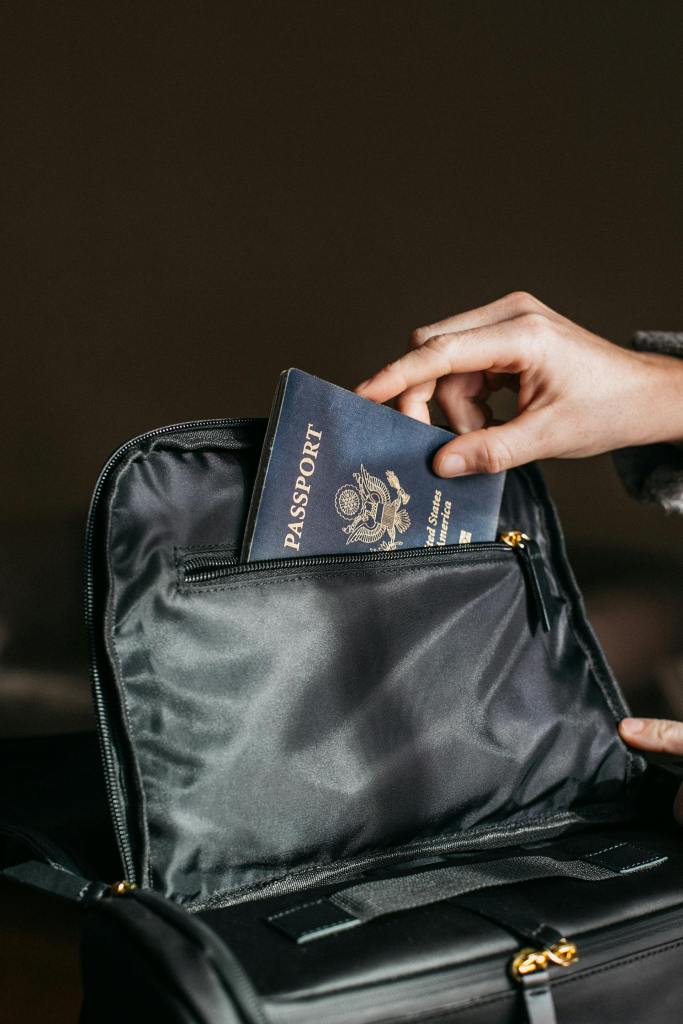
Please note that this exemption is valid for short-stay visas, for a maximum of up to 90 days, and for the purpose of tourist activities, visiting family, participating in lectures, meetings, and other similar activities that do not constitute paid work. Any violation of these conditions may result in deportation, fines, and may prevent you from returning to the country in the future.
How much does it cost to get a visa to Japan?
For countries that are exempt from visas, there is obviously no cost. Now, if you are in a country that requires a visa to go to Japan, then a symbolic fee needs to be paid for visa issuance services.
Payment will always be made at the Embassy/Consulate of your country in your local currency. However, the estimated amount is 3,000 JPY (yen) for a single-entry visa, 6,000 yen for a multiple-entry visa, and 700 yen for a transit visa. Based on these values, you can convert to find out how much the visa fee is in your local currency.
What is the validity of the visa for Japan?
If you obtain a short-stay visa for Japan, the validity is 3 months. If, after some time, you want to return to Japan, you will need to obtain a new visa.
For those in countries exempt from the need for a visa, this validity period does not exist; however, you cannot stay for a period longer than 90 days in the country.
What to do after obtaining the visa?
Now that you know all the necessary steps to get the visa and travel to Japan, it’s important to ensure that you are prepared to make the most of your trip with intelligent use of your money, avoid tourist traps, and be able to move around the country without headaches.
One of the most important things is to know how you can get around Japan, making the best possible use of transportation passes without paying more than necessary. For this, check out our article on the JR Pass, the pass designed for tourists to move around Japan’s train, subway, and bus lines.
Do you have any questions? Send them to us in the comments! Your contribution is very important to us so that we can produce content of interest to you, and our community continues to grow!
 L.A.D.Y.H Travels
Deixe um comentário