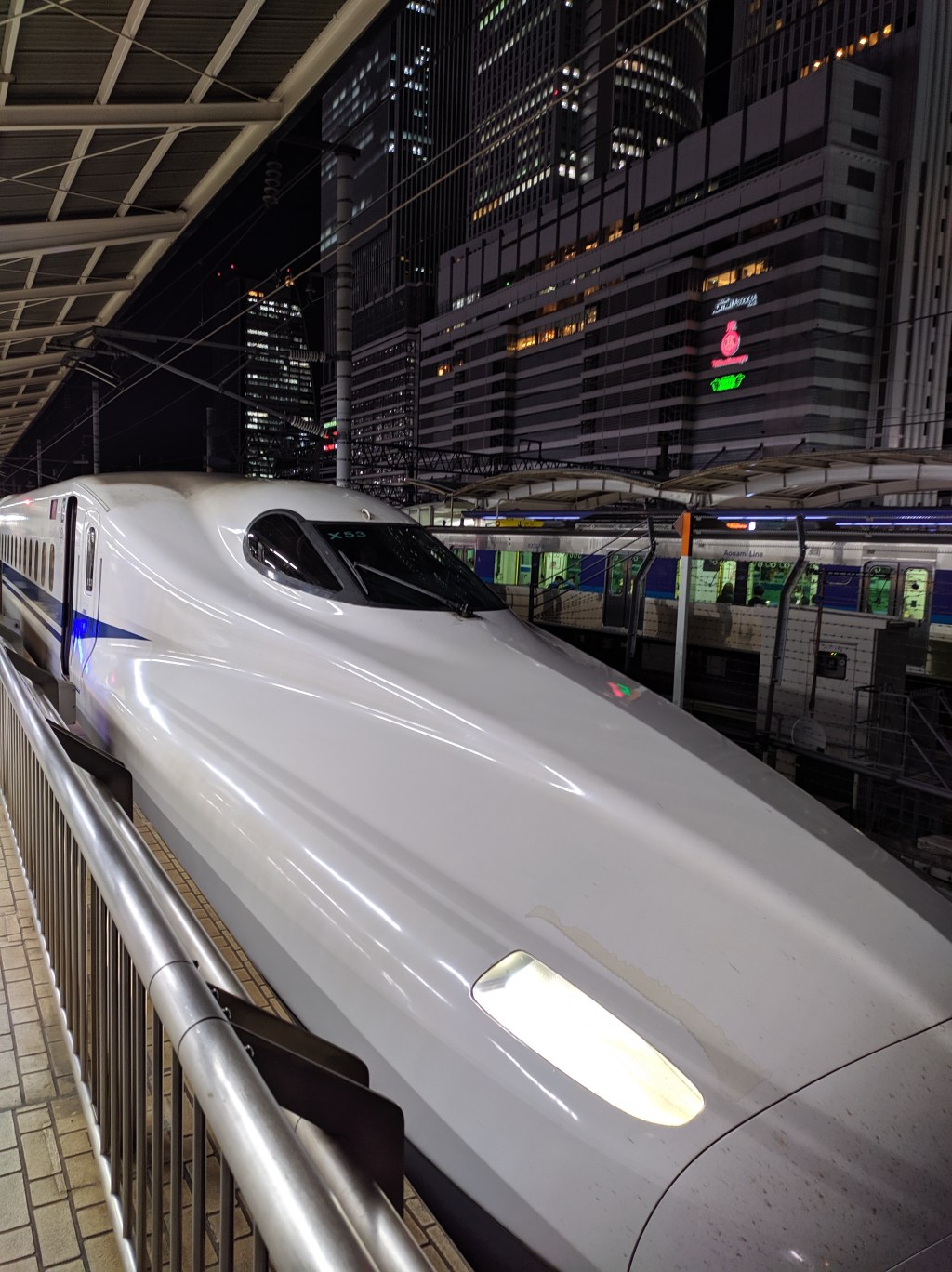
For a long time, when it came to traveling to Japan, the go-to solution for getting around the country was undoubtedly the JR Pass (Japan Rail Pass). However, in mid-October 2023, the pass prices increased significantly, and depending on your travel itinerary for Japan, it may no longer be as cost-effective. Keep reading to find out in which situations the JR Pass is still worth it and tips on how you can save money with other passes!
Is the JR Pass still worth it?
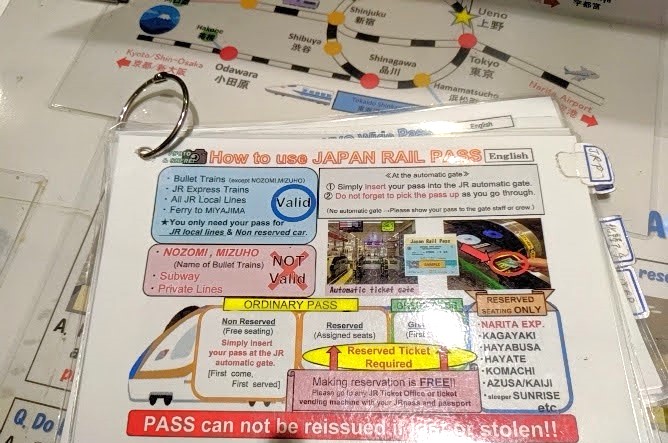
Depending on your itinerary, it can indeed be worth it. The JR Pass is an exclusive pass for foreigners in Japan, providing access to JR subway, train, and bus lines.
Moreover, with the JR Pass, you enjoy the advantage of riding on high-speed trains, the well-known shinkansens, with unlimited trips. You can also reserve seats for free and use the Hiroshima-Miyajima ferry. In other words, the JR Pass is a very advantageous and facilitative travel pass, sparing you from dealing with separate ticket purchases, seat reservations, and other matters, which can be confusing for those unfamiliar with Japan’s ticket system.
However, the Japan Rail Pass is most cost-effective for itineraries involving multiple long-distance journeys in Japan, as train tickets can be quite expensive, especially for shinkansen rides. Therefore, let’s explore some situations where the JR Pass might be worth it and other scenarios where you should consider alternative passes for savings and to make the most out of your trip.
Routes where JR Pass is worth it
I’ll give 2 examples of routes where the JR Pass would be worth the current price as of January 2024.
The Japan Rail Pass has 3 options: 7, 14, or 21 days. The 7-day pass is priced at $352, the 14-day pass at $563, and the 21-day pass is priced at $704. We are using the fixed value of the pass in US dollars here. It’s important to consider that, depending on the dollar exchange rate, the value in your local currency may vary, and you may end up paying more or less for the JR Pass.
Route 1 – Tokyo, Hiroshima, Kyoto, Kanazawa
Let’s use the example of the 7-day pass, which is priced at $352 or 50,000 JPY (Japanese yen).
If you want to travel from Tokyo to Hiroshima, then to Kyoto, go up to Kanazawa, and return to Tokyo, the JR Pass already pays for itself. If you were to buy individual tickets, you would pay 52,260 JPY, so with the Japan Rail Pass, you would be saving 2,260 yen.
This value only includes the intercity travels. It’s important to consider that for internal travel within cities and sightseeing, you may need to use trains, subways, and buses. With the JR Pass, you have access to various transport lines from the company that can take you to the places you need within the cities.
Route 2 – Tokyo, Nagano, Gifu, Shizuoka, Yamagata
Another example is an itinerary starting from Tokyo and heading to the regions of Nagano, Gifu, Shizuoka (for Mount Fuji enthusiasts), a trip to Yamagata, and finally returning to Tokyo. Just the shinkansen and train journeys to these regions would cost around 52,570 yen, which is 2,570 yen more than the 7-day JR Pass.
Even if you plan to stay in Japan for more than 7 days – I personally recommend at least 15 days – if you’re going to stay in Tokyo for a few days to get acclimated and explore the city, you can wait to activate your JR Pass until you leave the city. In a 10-day trip, for instance, where you’ll spend 3 days in Tokyo, you can use rechargeable cards (very common in Japan) for local transportation within the city. When traveling from Tokyo to the next city, in this case, it could be Nagano or Yamagata, you would then activate the pass. This way, for the remaining 7 days of your trip, you would have the Japan Rail Pass for transportation.
When JR Pass does not pays off
Now that you’ve seen that the JR Pass is valuable in situations that involve longer-distance travel and the use of often expensive shinkansen, let’s look at examples where it wouldn’t be a good idea to purchase it.
If you’re planning an itinerary that focuses on a specific region of Japan, where the distances between cities are shorter, buying the JR Pass wouldn’t be recommended.
Most people, on their first trip to Japan, want to explore cities (besides Tokyo) such as Osaka, Kyoto, Hiroshima, Nagasaki, and others that are considered postcards of the country, holding a lot of history and worldwide recognition. In such situations, regional passes will undoubtedly be smarter and more cost-effective solutions than buying the 7-day Japan Rail Pass, as you’ll see below.
Route 1 – Tokyo, Osaka, Kyoto, Kobe, and Nara
Arriving in Tokyo and planning a route entirely focused on the Kansai region of Japan, involving cities like Osaka, Kyoto, Kobe, and Nara, with a return to Tokyo, the cost of these travels would be around 37,100 JPY. This presents a difference of 12,900 yen from the cost of the 7-day JR Pass, considering it costs 50,000 JPY. Therefore, for this route, the Japan Rail Pass wouldn’t be worth it. Even if you have to travel internally within the cities, purchasing the JR Pass wouldn’t be necessary, and there are other more advantageous regional pass options, which I’ll discuss shortly.
Now, if you wanted to add a trip to Hiroshima to this same itinerary, the JR Pass becomes worthwhile again due to this round trip from a city outside the Kansai region. The cost of individual tickets purchased in Japan for each trip would be around 55,620 JPY, compared to the 50,000 JPY for the JR Pass.
Route 2 – Osaka, Hiroshima, Kobe, Kyoto, Nara
For those who don’t insist on visiting Tokyo, there are other possibilities. For example, arriving in Osaka and planning an itinerary to Nara, Kyoto, Kobe, Hiroshima, and returning to Osaka, the cost of traveling to these cities would be around 26,180 JPY, a little more than half the cost of the JR Pass (remember, 50,000 JPY). In this case, the Japan Rail pass also wouldn’t be worth it.
An important point is that it’s not always worth arriving in Osaka. Tickets to Haneda and Narita – the two airports in Tokyo – are often cheaper than tickets to Osaka. So be careful: research ticket prices thoroughly and compare, as sometimes you might end up saving by not buying the JR Pass but spending more on a pricier plane ticket, and in the end, it’s six of one, half a dozen of the other. However, if you find promotions for other airports in Japan that are closer to the cities you want to visit, then take advantage!
Alternative passes: What are they?
Well, in situations where the Japan Rail Pass isn’t worth it, you can always buy individual tickets (which might not be as inviting and easy to do) or use alternative passes.
These passes are regional or local, not only offering a more budget-friendly option but also additional benefits.
Kansai-Hiroshima Area Pass
This pass is a JR West pass, meaning it’s a regional pass. The Kansai-Hiroshima Area Pass is a 5-day consecutive pass that grants access to the entire Kansai area and allows travel to Hiroshima. Compared to the $360 cost of the 7-day JR Pass, this one is $118, less than half the price.
This pass provides unlimited travel within its operating region, including the use of Nozomi and Mizuho shinkansen. You can also use the ferry to Miyajima and even rent bicycles at stations with the Ekirin-kun service available.
The only caveat is that with this pass, seat reservations are not possible; they need to be made and paid for separately at JR ticket machines in the stations. For more information on this pass, check here.
Kansai Wide Area Pass
If Hiroshima isn’t in your plans, you can travel around Kansai for even less.
The 5-day consecutive Kansai Wide Area Pass costs $84, providing access to the Sanyo Shinkansen between Osaka and Okayama and express trains that take you throughout the Kansai region. It’s much cheaper than the 7-day JR Pass.
With this pass, you can also rent bicycles and use local JR train/subway lines and buses. For more information on this pass, you can also see here.
Kansai Area Pass
Want to pay even less? Let me show you how. If you’re planning a shorter trip, the Kansai Area Pass gives you several options: 1, 2, 3, or 4 consecutive days. Of course, the prices vary: $22 for a 1-day pass, $36 for 2 days, $42 for 3 days, and $50 for 4 days.
For more information about this pass, check here.
Other Alternative Passes
For those wanting to explore not only Kansai but also places like Fukui and Kanazawa, it’s worth considering the Kansai-Hokuriku Area Pass for 7 consecutive days at a cost of $118. For more information about this pass, check here.
Even if you’re arriving in Tokyo and want the best options for passes and different regions to visit, the Osaka-Tokyo Hokuriko Arch Pass is a great option, costing $169 for 7 consecutive days, still well below the cost of the 7-day JR Pass. With it, you can visit – in addition to Tokyo and Osaka – cities like Kyoto, Nagano, Kanazawa, and others covered by the pass. Learn more about it here.
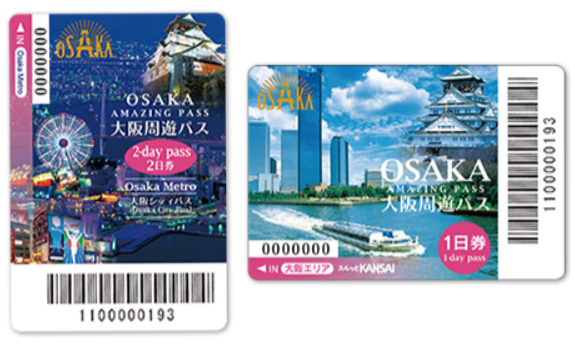
For those who want to explore some cities at a more leisurely pace, there are exclusive local passes that not only allow you to travel on various subway, train, and bus lines but also provide discounts on city tours. In other words, you can increase your savings even more with cheaper transportation and tours. This is the case with the Osaka Amazing Pass, which allows you to visit over 40 points of interest completely for free and offers unlimited bus and train rides covered by the pass. There are also additional benefits such as discounted attraction tickets and promotions at exclusive stores for pass holders.
There are countless other passes for all regions and cities in Japan, so always plan your itinerary and research all available options. Get prices and make spending estimates in different scenarios so that you can make the best use of your money and fully enjoy your trip to Japan!
Where to buy the JR Pass and alternative passes
Both the JR Pass and alternative passes from the Japan Rail network (such as Kansai-Hiroshima Pass, Kansai Wide Area Pass, and others) can only be used by individuals holding a temporary visitor visa, meaning tourists or foreigners with temporary business trips in the country. Therefore, Japanese citizens or those with a Japanese passport cannot purchase these passes.
To purchase the JR Pass or alternative passes, you need to do this BEFORE arriving in Japan. The purchase is usually done online on authorized Japan Rail Pass websites or through travel agencies. You will receive the vouchers by mail at your home and must present them at one of the JR counters at train stations. When you do this (you will need to present your passport to prove your identity and ensure your details are correct), you will receive your official JR Pass to be used throughout your journey.
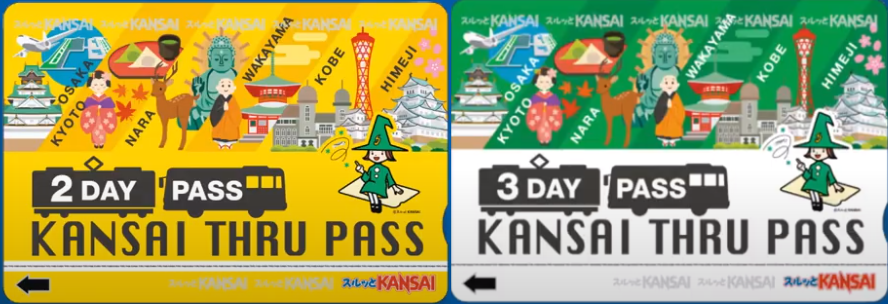
As for local passes, such as the Osaka Amazing Pass, Kansai Thru Pass, and others, they can be purchased directly in Japan at specific sales outlets or even at some hotels that may have passes for sale to guests.
The Kansai Thru Pass, available for 2 or 3 days, can be purchased at tourist information centers, certain Bic Camera stores (a department store chain offering a wide range of products, including appliances, electronics, clothing, souvenirs, games, miniatures, dolls, cosmetics, and more), or at hotels such as Sheraton Miyako in Osaka or Kobe Portopia in Kobe. If you are in Korea, Taiwan, Hong Kong, or Thailand, you should be able to buy the Kansai Thru Pass through local travel agencies. More information about this pass can be found here.
IC Cards for Local Transportation
In case you arrive in Tokyo and wish to activate your JR Pass or regional pass only when traveling to the next city, you can use IC Cards to explore Tokyo using train lines, subway, and buses.
IC Cards are rechargeable cards that can be used to pay for transportation fares; you simply need to touch them on the card reader at station turnstiles or buses. Moreover, IC cards can be used at various shops, restaurants, and the famous vending machines found on practically every street corner in Japan.
The most well-known ones are Suica, Pasmo, and Icoca, but there are various options available depending on the region of Japan.
Summary
So, did you enjoy gaining a better understanding of the JR Pass and other alternative passes to make the most of your money in planning your trip to Japan?
As mentioned, the JR Pass is worthwhile in situations where you will be covering longer distances; otherwise, regional passes might be more interesting and cost-effective. Always remember to outline your itinerary first and calculate the routes to determine whether purchasing the Japan Rail Pass is worthwhile or not. Apps like Navitime Japan or even this calculator can assist you in figuring out whether it’s worth buying the JR Pass.
If you liked this content, don’t forget to comment and share with others! Your support and feedback mean a lot to us.
See you soon!
 L.A.D.Y.H Travels
Deixe um comentário